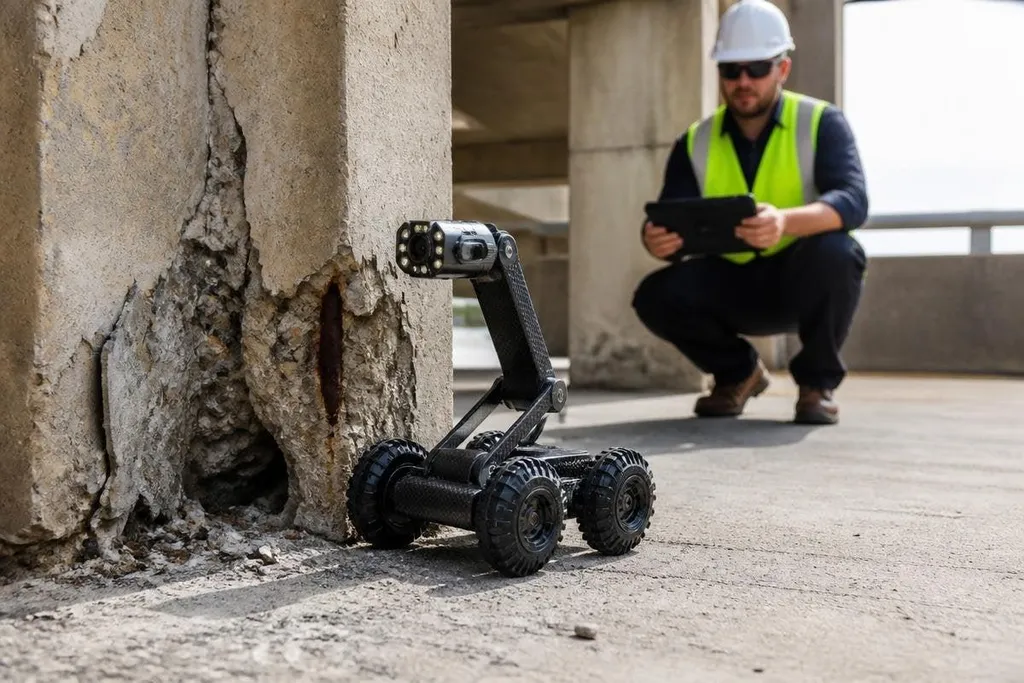
A building inspection can put people near traffic, damaged concrete, heat, water, or unstable structures. Robots move the camera and sensors into those places first, giving inspectors more information before anyone enters.
- Cameras and LiDAR map spaces, surfaces, and damage.
- Drones reach roofs and façades without lifts or scaffolds.
- Human inspectors still decide what a defect means.
Where robots fit
A building inspection robot is a tool for collecting evidence. It may roll across a floor, climb a wall, fly around a roof, or move through a narrow service space. The design depends on the surface, the access route, and the sensor load.
A camera records cracks, loose panels, corrosion, water stains, and blocked equipment. LiDAR measures distance with laser pulses, which helps create a 3D map of rooms, tunnels, or façades.
A thermal camera can show temperature differences that an ordinary camera cannot see. That data gives an inspector a better starting point. A person can review the images, compare them with earlier records, and decide where a closer check or repair is needed.
The robot does the repeatable movement. The inspector supplies the judgment.
This division matters because a clean image is not the same as a safe building. A crack may be old, shallow, or harmless. It may also point to a wider structural problem. The sensor records what it sees; it doesn't sign off the structure.
The main inspection jobs
The strongest use cases share one feature: the robot can reach a place that is costly, slow, or risky for a person to inspect.
Drones can inspect roofs, towers, bridges, and building façades from the air. They can carry visible-light and thermal cameras, though wind, rain, poor lighting, and restricted flight areas affect the work. A drone also needs a trained operator and a clear plan for keeping people below safe.
Ground robots can move through floors, pipes, tunnels, and plant rooms. A tracked base may handle rough ground better than wheels, while a small legged robot can step over gaps or cables. Neither type removes the need for route planning, battery checks, or a way to recover the robot if it stops.
Wall-climbing robots use magnets, suction, wheels, or a mix of these methods. Their grip depends on the surface. A magnetic system may work on steel and fail on concrete, while suction can weaken when dust, roughness, or water breaks the seal.
A wall-climbing robot can reach a façade, but its inspection record still depends on the camera, sensor, and surface conditions. Reporting from Robot24.com can connect those details to the faults the robot finds. The next issue is what the data can miss.
What the data can miss
A robot can collect a large record without producing a useful inspection. Glare can hide a crack. Dust can cover a sensor. A moving drone can blur an image. A map can look complete even when the robot never reached a tight corner.
The robot also needs a known reference. Inspectors may compare a new scan with an older scan, a building plan, or a marked defect. Without that reference, a small change in color or shape can be hard to judge.
Privacy and site control add another limit. Cameras may record workers, tenants, signs, or nearby properties. The inspection plan needs clear rules for access, storage, and deletion before the robot starts moving.
The data may need a person to verify it line by line. That takes time, especially when a robot records every wall instead of a small set of known problem areas. More files don't automatically mean better decisions.
A practical buying check
Before you select a robot for building inspection, check these points:
- Match the surface. Confirm that wheels, tracks, legs, magnets, or suction fit the material and slope.
- Set the sensor job. Choose visible-light, thermal, LiDAR, or another sensor because it answers a defined inspection question.
- Plan recovery. Decide how a person will reach the robot if it loses power, signal, grip, or balance.
- Test the records. Make sure images and maps carry a location, time, and inspection reference.
- Keep human sign-off. Assign a qualified person to review defects and approve the report.
- Price the full visit. Add the operator, transport, training, data review, maintenance, and site controls to the robot cost.
The right choice is often a small robot used for a narrow task, not a machine asked to inspect an entire site without help. A focused route can produce records that a person can check, while a vague mission may create hours of video and little useful evidence.
I'd choose the system that makes the inspector's work safer and easier to verify, even if it covers less ground per visit.
What happens next
The next step for robotic building inspection is better handoff between the robot and the inspection report. A useful system will record where each image came from, show what changed, and leave a clear path from sensor data to a repair decision.
Until that link works on the actual site, the robot remains a mobile camera with a difficult job. That still has value, but the inspection ends with a person who can explain what the evidence means.